
In the manufacturing of mining and agricultural equipment, the longevity of your branding, safety labeling, and identification tags depends entirely on the initial bond. Whether you are installing Cut Vinyl decals, Printed decals, or Engraved Plastics, the mounting surface must be chemically decontaminated to ensure the adhesive performs to its engineering specifications.
The Problem: The Invisible Barrier
In a workshop environment, surfaces that look perfectly clean are often contaminated with a microscopic layer of "invisible" barriers. Fine dust, hydraulic oil mist, and even natural skin oils create a film that prevents adhesives from "cross-linking" with the paint or metal.
If this step is neglected, the result is inevitable: edge-lift, bubbling, or tags vibrating loose in high-demand work environments.
Why the Right Cleaner Matters
A successful bond is critical whether you are applying Cut Vinyl, Printed decals, or mounting Engraved Plastics. The adhesive requires a chemically clean mounting surface to work.
Using the wrong workshop chemicals doesn't just prevent the label from sticking - it can actively destroy the product:
Methylated Spirits (Metho): Metho may contain additives that leave an invisible, oily film behind. Because of this risk, our vinyl and adhesive manufacturer (Orafol) specifically recommends avoiding it for final surface preparation.
Ammonia and Harsh Solvents: Glass cleaners (which often contain ammonia) or aggressive workshop solvents can chemically attack the adhesive layer itself. This causes delamination - a failure where the vinyl weakens and peels away, leaving a mess of sticky adhesive trapped on the machine.
The Professional Prep Protocol
To ensure all identification materials last their full rated lifespan, follow this three-step workshop protocol:
The Heavy Clean: Use a dedicated degreaser or soapy water to remove bulk dirt, mud, or workshop grease. Ensure the area is completely dry.
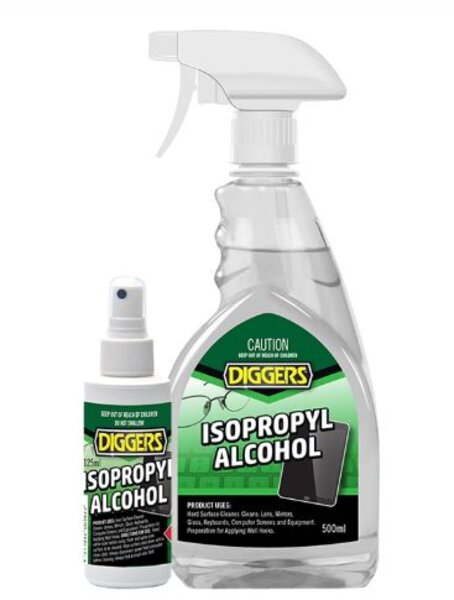
The Chemical Strip: Use a clean, lint-free cloth dampened with Isopropyl Alcohol (IPA). Wipe the application area thoroughly to strip away any remaining residue.
The Dry Application: Wait a few moments for the IPA to evaporate completely. Apply your decals or tags dry. We don't recommend using fluids or soapy water to help position the label, as it can interfere with the adhesive bond. Contact us if you'd like instruction on how to apply your decals dry.
Using Isopropyl Alcohol (IPA) is the only professional standard we recommend to guarantee your labels and tags remain permanently attached to your machinery.